Halo

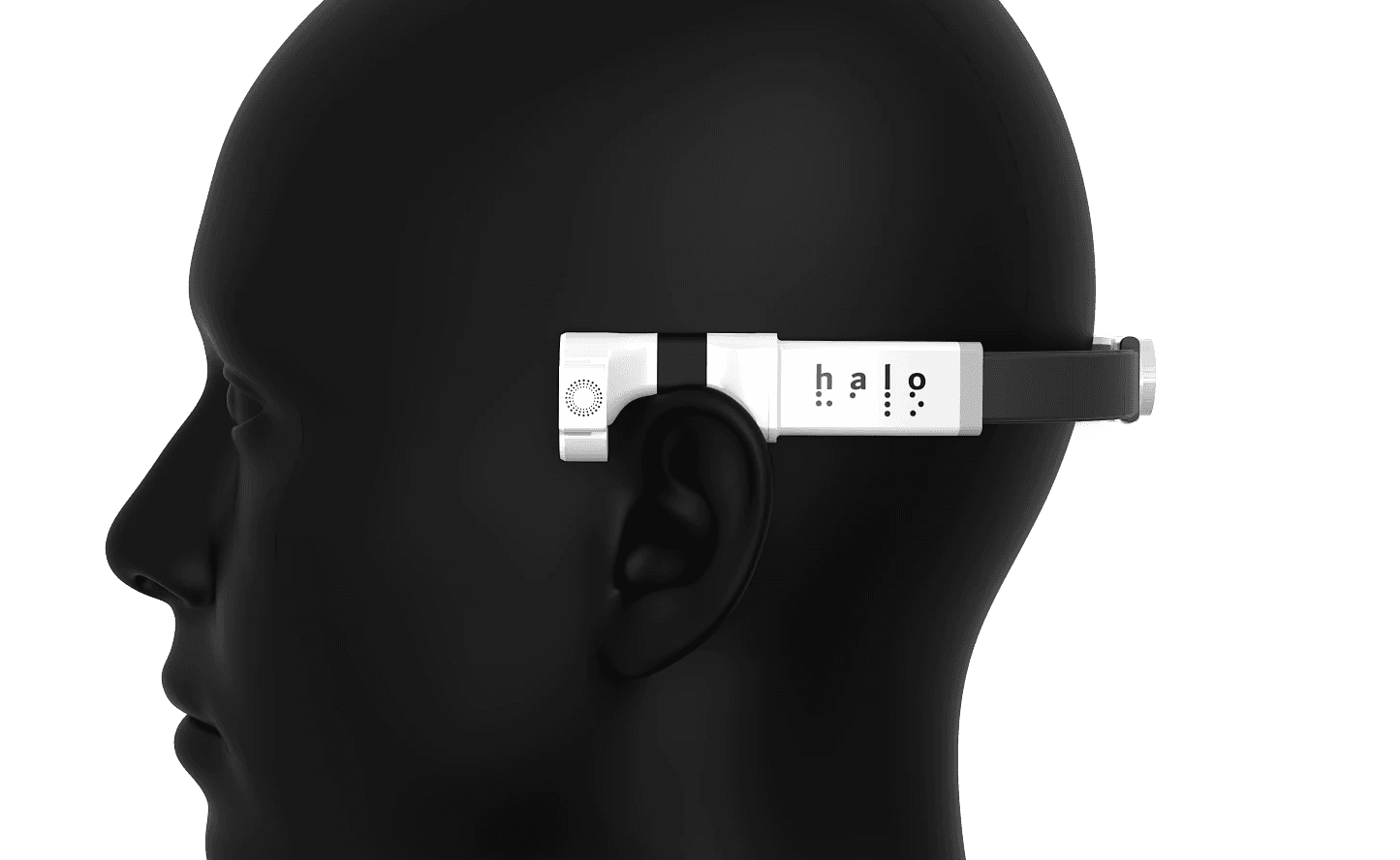
This project began with in-depth research into the barriers faced by blind and partially sighted individuals when engaging in outdoor physical activity. Through primary interviews and secondary research, key challenges such as loss of orientation, safety risks, and limited accessibility were identified. Building on these insights, I designed Halo — a head-mounted device that integrates camera-based navigation with bone conduction audio feedback. The system provides real-time guidance, hazard detection, and route assistance, allowing users to move through outdoor environments more safely and independently. The design process included user journey mapping, concept development, prototyping, and interaction design, with a strong focus on dignity, usability, and enhancing the overall sensory experience.

May 30, 2025

Halo

This project began with in-depth research into the barriers faced by blind and partially sighted individuals when engaging in outdoor physical activity. Through primary interviews and secondary research, key challenges such as loss of orientation, safety risks, and limited accessibility were identified. Building on these insights, I designed Halo — a head-mounted device that integrates camera-based navigation with bone conduction audio feedback. The system provides real-time guidance, hazard detection, and route assistance, allowing users to move through outdoor environments more safely and independently. The design process included user journey mapping, concept development, prototyping, and interaction design, with a strong focus on dignity, usability, and enhancing the overall sensory experience.

May 30, 2025

CLIENT

Visually Impaired Users

Role

Designer

Service

UX/ID

CLIENT

Visually Impaired Users

Role

Designer

Service

UX/ID

CLIENT

Visually Impaired Users

Role

Designer

Service

UX/ID

Project Details

Project Details

Understanding the Problem

Halo was developed in response to the barriers visually impaired individuals face when accessing outdoor exercise. Research highlighted issues around safety, navigation, and loss of orientation, with many users feeling uncertain or at risk in open environments. These challenges, combined with low levels of physical activity, emphasised the need for a solution that could provide greater confidence, independence, and support outdoors.

Design Development & Journey

The project evolved through an iterative, research-led process, starting with user interviews and insight gathering to better understand real experiences. Early concepts explored both environmental and technological approaches before focusing on a wearable solution. Through sketching, prototyping, and system development, the design was refined to integrate navigation, hazard detection, and user feedback into a seamless and intuitive experience.
Our Solution

Our Solution

Final Solution

The final outcome is Halo, a wearable navigation device designed to support visually impaired users during outdoor activity. Using camera-based sensing, GPS, and bone conduction audio, the system provides real-time guidance and alerts while allowing users to remain aware of their surroundings. The design prioritises comfort, ease of use, and reliability, creating a more confident and independent outdoor experience.